
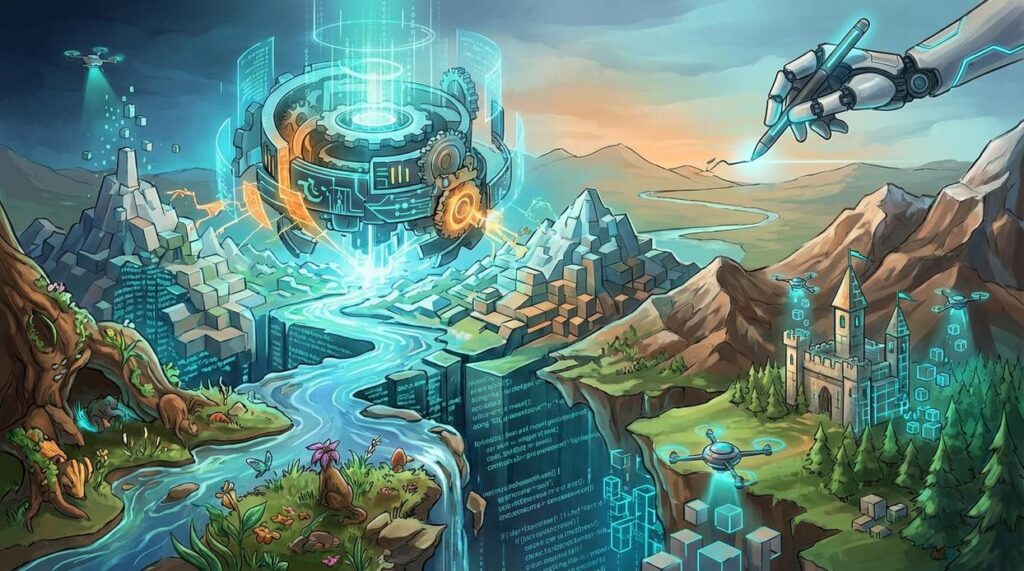
Video game mods have always pushed boundaries—but scripted dialogue trees and pre-set NPC behaviors can only go so far. Eventually, even the most ambitious traditional mods start to feel predictable. If you’re wondering how artificial intelligence is changing that, you’re in the right place. This guide explores how AI-powered game mods are creating dynamic worlds, unscripted conversations, and gameplay that evolves in real time. We’ll break down what these mods are, show real examples of how they work, and point you toward where you can find them—so you can experience a new era of endlessly replayable gaming.
Defining the AI Mod: More Than Just a Smarter Enemy*
Traditional “improved AI” mods vs. true AI integration isn’t just a tech upgrade—it’s a philosophy shift.
A: Improved AI means tighter pathfinding, faster reactions, sharper aim. Think enemies who flank better in Call of Duty. Smarter? Yes. Transformative? Not really.
B: True AI Integration uses systems that learn, generate, and adapt. Large Language Models (LLMs)—AI trained on massive text datasets (Stanford, 2023)—can create dynamic dialogue instead of recycled lines. Generative Adversarial Networks (GANs), where two neural nets compete to create realistic outputs (Goodfellow et al., 2014), can produce new textures or faces on the fly.
- Fixed scripts vs. evolving responses
- Pre-built assets vs. generated content
- Difficulty spikes vs. emergent storytelling
The goal isn’t brutal challenge; it’s immersion. Imagine an NPC remembering your betrayal three quests later (yes, really). That’s the leap AI-powered game mods promise.
Pro tip: Balance novelty with stability—cutting-edge mods can strain performance (your GPU will complain).*
Breathing Life into Worlds: AI-Driven NPCs and Dynamic Realities
Imagine stepping into a game world where every character thinks on their feet instead of flipping through the same three dialogue cards. That’s the promise of AI-driven NPCs. With unscripted dialogue mods connecting characters to large language models (LLMs)—systems trained to generate human-like text—conversations become less like vending machines and more like real debates. Take Skyrim’s “Herika” mod, for example. Instead of canned responses, she reacts to your actions, remembers past events, and adjusts her tone. It feels less like clicking dialogue trees and more like talking to a companion on a road trip (awkward silences included).
Meanwhile, adaptive combat tactics turn predictable enemies into chess opponents. Rather than charging headfirst every encounter, AI-enhanced squads learn from your habits. If you always snipe from rooftops, expect flanking maneuvers next time. It’s similar to playing pickup basketball: once someone realizes you favor your left side, they adjust defense accordingly. Over multiple encounters, these systems evolve, creating tension that static scripts simply can’t replicate.
Then there are living environments. AI-driven simulations give NPCs shifting goals, schedules, and relationships. Think of it as a digital ant farm where each ant has ambitions, grudges, and alliances. Markets fluctuate, friendships sour, and rivalries ignite without direct scripting.
Critics argue this unpredictability risks breaking narrative cohesion. That’s fair—too much chaos can dilute storytelling. However, when balanced carefully, AI-powered game mods transform worlds from stage plays into ecosystems. And ecosystems, unlike scripts, breathe.
Infinite Adventures: AI’s Role in Procedural Content Generation

Procedural Content Generation (PCG)—the use of algorithms to automatically create game content—has evolved from simple random maps to fully dynamic story engines. Today, AI mods can build endless dungeons, branching quests, and reactive NPC dialogue based on rule sets defined by developers or modders. The result? No two playthroughs feel identical (which is great news for anyone who’s memorized every Skyrim cave layout).
Some critics argue AI-generated quests feel repetitive or lack narrative depth. That concern isn’t unfounded. We’re still figuring out how well large models can sustain long-term storytelling. But when tuned carefully, AI-powered game mods can surprise players with emergent scenarios that handcrafted design alone might never attempt.
On the visual side, AI tools now upscale textures, generate item icons, and craft unique character portraits in minutes. This dramatically cuts manual workload and complements techniques like using ray tracing and graphics mods to transform visuals.
• Infinite map layouts
• Dynamic quest logic
• Rapid asset generation
Will AI completely solve content drought? Honestly, it’s too early to say. But the potential for near-limitless replayability is hard to ignore.
Getting Started: Your Guide to Finding and Installing AI Mods
I still remember the first time I installed an AI-driven NPC mod. The character responded to my off-script question with something that actually made sense (and a little sass). That’s when I realized AI-powered game mods were changing everything.
Where to Look
Start with trusted hubs:
- Nexus Mods (huge library, active community)
- GitHub (great for experimental or open-source projects)
- Modding Discord servers (often where beta builds drop first)
A modding community is simply a group of players and developers who create and share custom content for games.
Essential Keywords
When searching, try:
- “LLM NPC” (LLM = Large Language Model, an AI trained on massive text data)
- “AI Generated”
- “Neural Network”
- “Generative AI”
Installation Caveats
Most AI mods require:
- A script extender (a tool that expands a game’s scripting capabilities)
- An external API key for AI services
- Strong CPU and VRAM headroom
Pro tip: Always read the requirements twice before installing.
Performance vs. Experience
Some players argue the immersion boost isn’t worth the performance hit. Fair point—AI systems can tax your hardware. Start small with lighter mods, monitor frame rates, and scale up gradually. Your GPU will thank you (trust me).
As AI continues to revolutionize the gaming landscape, enhancing everything from graphics to gameplay mechanics, it’s exciting to see how these advancements tie into fresh content found in Scookiegeek’s latest game updates by Simcookie – for more details, check out our Scookiegeek Latest Game Updates By Simcookie.
The Future is Unwritten: Your Next Adventure Awaits
AI is no longer a side feature in gaming—it’s the engine driving a new era of creativity. With AI-powered game mods, NPCs evolve, stories adapt, and no two playthroughs ever feel the same. You came here to see how AI is transforming modding, and now you know: static, predictable worlds are being replaced by living, responsive experiences.
If you’re tired of scripted dialogue and recycled quests, this is your moment. Dive into trusted modding communities, download a well-documented AI mod, and experience the difference firsthand. Join thousands of gamers already upgrading their worlds—explore, install, and start playing smarter today.

 Lorven Zyphandell has opinions about platform play strategies. Informed ones, backed by real experience — but opinions nonetheless, and they doesn't try to disguise them as neutral observation. They thinks a lot of what gets written about Platform Play Strategies, Insider Tips, Gamer Setup Optimization Tips is either too cautious to be useful or too confident to be credible, and they's work tends to sit deliberately in the space between those two failure modes.
Reading Lorven's pieces, you get the sense of someone who has thought about this stuff seriously and arrived at actual conclusions — not just collected a range of perspectives and declined to pick one. That can be uncomfortable when they lands on something you disagree with. It's also why the writing is worth engaging with. Lorven isn't interested in telling people what they want to hear. They is interested in telling them what they actually thinks, with enough reasoning behind it that you can push back if you want to. That kind of intellectual honesty is rarer than it should be.
What Lorven is best at is the moment when a familiar topic reveals something unexpected — when the conventional wisdom turns out to be slightly off, or when a small shift in framing changes everything. They finds those moments consistently, which is why they's work tends to generate real discussion rather than just passive agreement.
Lorven Zyphandell has opinions about platform play strategies. Informed ones, backed by real experience — but opinions nonetheless, and they doesn't try to disguise them as neutral observation. They thinks a lot of what gets written about Platform Play Strategies, Insider Tips, Gamer Setup Optimization Tips is either too cautious to be useful or too confident to be credible, and they's work tends to sit deliberately in the space between those two failure modes.
Reading Lorven's pieces, you get the sense of someone who has thought about this stuff seriously and arrived at actual conclusions — not just collected a range of perspectives and declined to pick one. That can be uncomfortable when they lands on something you disagree with. It's also why the writing is worth engaging with. Lorven isn't interested in telling people what they want to hear. They is interested in telling them what they actually thinks, with enough reasoning behind it that you can push back if you want to. That kind of intellectual honesty is rarer than it should be.
What Lorven is best at is the moment when a familiar topic reveals something unexpected — when the conventional wisdom turns out to be slightly off, or when a small shift in framing changes everything. They finds those moments consistently, which is why they's work tends to generate real discussion rather than just passive agreement.