Gaming is evolving faster than ever, and staying competitive means more than just logging extra hours. Whether you’re looking for the hottest gaming trends, advanced modding guides, optimized play strategies, or tech-enhanced upgrades for your setup, this article is designed to give you exactly what you came for: actionable insights that improve real in-game performance.
Many players struggle to keep up with constant updates, shifting metas, and new optimization tools. That’s why we’ve broken down the most relevant strategies, from performance-boosting mods to smarter setup configurations and even mental training for gamers that sharpens focus and reaction time.
Our insights are built on hands-on testing, deep analysis of current gaming trends, and continuous tracking of community-driven innovations. Instead of recycled advice, you’ll find practical recommendations that align with what competitive and casual players actually need right now.
If you want smarter gameplay, smoother performance, and a sharper edge, you’re in the right place.
Here’s a surprising truth: the lightning-fast reflexes, split-second decisions, and tactical planning you practice in-game don’t stay on the screen—they reshape your brain. Research shows action games can improve visual attention and processing speed (American Psychological Association). Yet most players grind for fun, not growth.
In my view, that’s a missed opportunity.
With a few tweaks, gaming becomes mental training for gamers. Choose strategy titles to sharpen planning, puzzle games to boost memory, and competitive shooters to refine focus. Then set goals, track reaction times, and reflect after matches (yes, like Rocky with a controller). Play smarter, not just longer.
The Brain on Gaming: Unpacking the Neurological Boost
Think of your brain as wet cement. Neuroplasticity is the idea that this cement can be reshaped by experience. In simple terms, it’s the brain’s ability to rewire itself based on what you repeatedly do. When you play interactive, stimulating games, you’re not just passing time—you’re pressing patterns into that cement. Over time, those patterns harden into stronger neural pathways (like carving shortcuts through a forest).
At the same time, dopamine—the brain’s reward chemical—acts like a motivational highlighter. When you beat a tough level, dopamine reinforces the steps that got you there. This strengthens learning loops and keeps you engaged during difficult challenges. It’s why grinding a boss fight can feel frustrating and addictive at once. In effect, games become mental training for gamers, conditioning persistence and adaptive thinking.
Meanwhile, fast-paced titles light up the prefrontal cortex (decision-making and focus) and the parietal lobe (spatial awareness). These regions work together like a skilled air-traffic control team, tracking movement and prioritizing threats.
Research backs this up: studies in Nature (2013) found action gamers improved visual processing speed, while work in Psychological Research (2017) linked gaming to greater cognitive flexibility. In other words, your controller might double as a cognitive gym.
Targeted Cognitive Gains: From Problem-Solving to Spatial Awareness
Video games aren’t just fast thumbs and flashy graphics. When designed well, they function as cognitive training systems—structured challenges that push the brain to adapt.
Problem-Solving and Strategy
Puzzle games and Real-Time Strategy (RTS) titles like StarCraft strengthen critical thinking, meaning the ability to analyze information and make logical decisions. Players must manage limited resources (gold, units, time) while planning several moves ahead. This mirrors real-world resource allocation in business or project management (just with fewer alien invasions). Research shows strategy gaming can improve cognitive flexibility and planning skills (Bavelier et al., 2012).
Some argue games oversimplify real-world strategy. That’s fair. But the mental process—evaluating trade-offs and anticipating consequences—remains highly transferable.
Working Memory and Reaction Time
First-Person Shooters (FPS) challenge working memory, the brain’s short-term information storage system. Tracking enemies, ammo counts, and map layouts under pressure sharpens rapid decision-making. Studies suggest action games improve visual attention and reaction speed (Green & Bavelier, 2003).
This is mental training for gamers in action—processing information faster without sacrificing accuracy.
Spatial Reasoning and Navigation
Open-world RPGs and sandbox games like Minecraft build spatial reasoning, the ability to mentally rotate and map 3D spaces. Players create internal maps of terrain and structures, strengthening navigation skills used in STEM fields.
Task Switching and Multitasking
Management simulations increase executive function—the brain’s control center for prioritizing tasks. Players constantly shift between:
- Budget oversight
- Resource production
- Crisis response
Understanding these systems also requires understanding game patch notes to stay ahead of the meta, since rule changes alter strategic outcomes.
Pro tip: Rotate game genres weekly to train different cognitive muscles.
Active Training Regimens: Turning Play into a Purposeful Workout
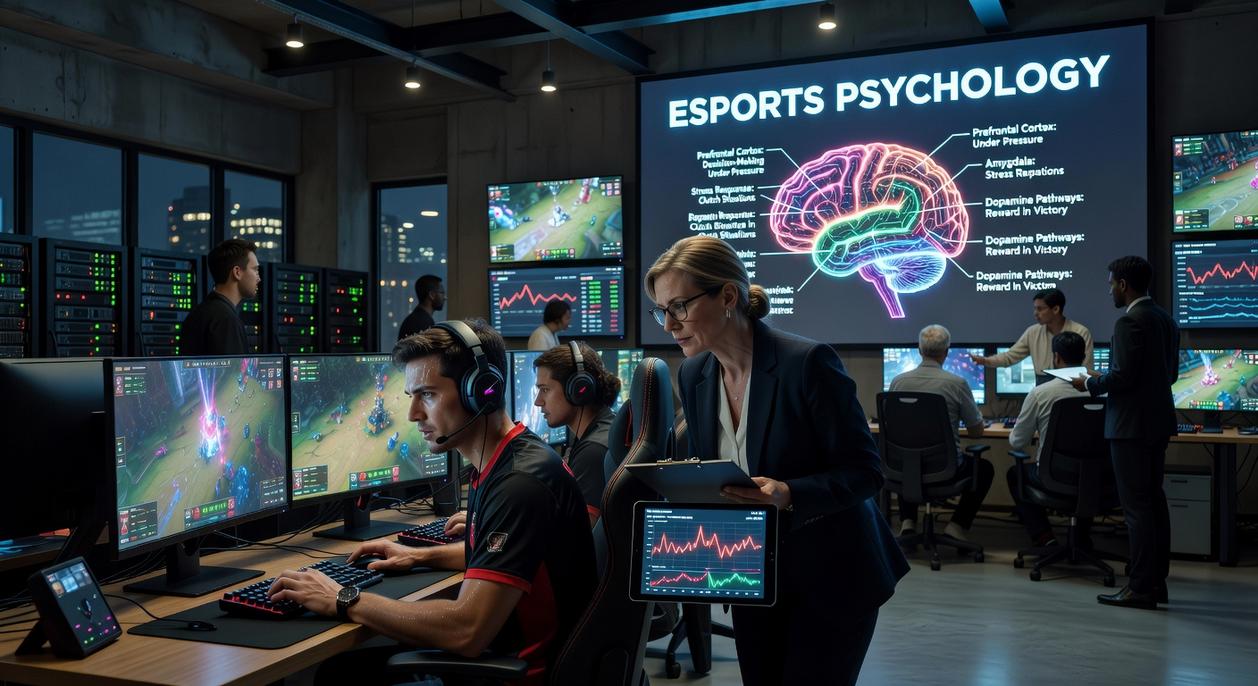
I used to grind ranked matches for hours, assuming repetition alone would make me better. It didn’t. My aim plateaued, my decisions lagged, and frustration set in (the classic “blame the lag” phase). That’s when I borrowed a concept from sports psychology: deliberate practice—a structured method of improving a specific skill through focused drills and feedback (Ericsson, 1993).
Instead of “playing to win,” I played to improve one micro-skill at a time. For aiming, I ran custom matches where I tracked only headshots. For map awareness, I set a timer to verbally call out enemy positions. This is mental training for gamers in its purest form: isolate, repeat, refine.
Technique 1: Post-Game Analysis
Record your matches. Rewatch without sound first to spot positioning errors, then with sound to catch missed audio cues. I once noticed I reloaded during safe windows too late, costing fights. Write one correction goal per session. (Pro tip: fix one mistake repeatedly before chasing another.)
Technique 2: Cognitive Load Variation
Increase difficulty intentionally. Disable the mini-map. Play an unfamiliar class. Try a “no ability” round. By stretching working memory—your brain’s short-term processing system—you expand adaptability. It feels chaotic at first (like switching from checkers to chess), but growth hides there.
Technique 3: Cross-Genre Training
Rotate genres weekly: FPS for reaction speed, strategy for planning, puzzle games for pattern recognition. Cross-training prevents cognitive plateaus and keeps your brain guessing.
Play with purpose, not just passion. That’s when improvement sticks.
Choosing Your Cognitive Arena: A Genre-to-Skill Matchup
I used to grind FPS matches nightly—until I realized my reflexes were sharp but my planning was chaos (classic button-masher energy). That’s when I started treating games like mental training for gamers.
For Strategic Thinking: RTS, Turn-Based Strategy, Puzzle Games
For Reaction Time & Attention: FPS, Fighting Games, Rhythm Games
For Spatial Awareness & Memory: Open-World RPGs, Platformers, Metroidvanias
For Resource Management: Simulation Games, City Builders
Pro tip: Rotate genres weekly to balance skills. Think of it like cross-training—just with boss fights instead of burpees.
Last year, I realized I was grinding ranked matches on autopilot. My win rate stalled, and frustration spiked. The shift happened when I treated gaming as training, not background noise. Gaming is a powerful, accessible tool for sharpening the mind, but only if you bring intention. The gap between passive play and progress is deliberate focus.
By choosing strategy-heavy titles and applying post-game analysis, I saw measurable gains in reaction time and decision speed. That’s mental training for gamers in action.
START SMALL.
- Review one replay.
- Note one mistake.
Your next session starts now—what will you improve? Today.
Level Up Beyond the Screen
You came here looking for smarter ways to upgrade your gameplay, sharpen your edge, and stay ahead of the competition. Now you’ve got the strategies, mod insights, and optimization tactics to do exactly that.
But here’s the truth: even the best mods and setups won’t fix inconsistent performance, slow reaction time, or ranked plateaus. The real difference-maker is combining powerful tech enhancements with mental training for gamers so you can perform under pressure, stay focused longer, and outplay smarter opponents.
The gamers who dominate aren’t just grinding more — they’re optimizing everything.
Now it’s your move.
Start refining your setup, apply these strategies, and commit to consistent improvement. If you’re serious about breaking through skill ceilings and staying on top of the latest modding and performance trends, dive into our expert guides and proven optimization strategies today. Thousands of competitive players rely on our insights to sharpen their edge.
Don’t stay stuck at your current rank. Upgrade your system. Upgrade your strategy. Upgrade your game.