
If you’re searching for real, practical ways to level up your gameplay, you’re likely tired of vague advice that doesn’t actually improve your performance. This article is built specifically for players who want measurable results—sharper accuracy, faster reaction times, and smarter in-game adjustments that translate into more wins.
We break down proven fps aim improvement tips that focus on mechanics, settings optimization, training routines, and strategic play enhancements. Whether you’re grinding ranked matches or fine-tuning your setup for competitive play, you’ll find actionable steps you can apply immediately.
Our recommendations are grounded in tested gameplay strategies, performance optimization research, and analysis of high-level competitive trends. Instead of generic suggestions, you’ll get clear guidance on what works, why it works, and how to implement it effectively.
By the end, you’ll have a structured plan to refine your aim, optimize your setup, and build consistent performance improvements in any FPS title.
From Wild Sprays to Laser Beams
You line up the shot. You click. And somehow, your crosshair teleports to another dimension. Frustrating, right? Losing gunfights you know you should win feels awful. So instead of vague fps aim improvement tips, let’s fix what’s actually holding you back.
First, dial in the fundamentals:
- Lower your sensitivity for smoother micro-adjustments.
- Disable mouse acceleration to keep movement consistent.
- Match in-game sens with your mouse DPI for predictable tracking.
Next, practice with intention—10 minutes of tracking drills beats hours of chaotic matches. Finally, record your gameplay. It’s painful, yes—but it exposes bad habits fast.
Dialing In Your Rig: The Hardware That Makes a Difference
Your Mouse Is Your Weapon
Your mouse isn’t just a controller—it’s your connection to every flick, micro-adjustment, and clutch moment. Weight matters: lighter mice (often under 70g) reduce fatigue and make small corrections smoother (your wrist will thank you after hour three). Shape and ergonomics are more personal. Some swear by symmetrical designs; others need a palm-filling curve. I’ll admit, there’s no universal “best” shape—hand size and grip style (palm, claw, fingertip) change everything. Sensor quality, however, is less debated. Modern optical sensors with low latency and no acceleration provide consistent tracking, which studies on input lag show can measurably impact reaction performance (NVIDIA Reflex research, 2023).
The Unsung Hero — The Mousepad
Mousepads quietly shape your aim. Control pads offer more friction, ideal for tactical shooters like CS2 or VALORANT. Speed pads glide faster, favoring tracking-heavy games like Apex Legends. Some argue pads barely matter. I disagree—surface consistency directly affects muscle memory. And size? Non-negotiable. A large pad supports low sensitivity without awkward resets. Bigger space equals smoother motion (yes, even if it eats your desk).
Seeing Is Winning — Monitor Tech
Higher refresh rates (144Hz+) show more frames per second, which reduces perceived blur and improves target tracking (Blur Busters, 2022). Pair that with low response times and you gain a real competitive edge. Is 240Hz necessary? Debated. But once you experience smoother motion, it’s hard to go back (like switching from DVD to 4K).
Ergonomics for Endurance
Proper desk height, neutral wrist alignment, and relaxed shoulders prevent strain. Consistency over long sessions beats raw speed. Many fps aim improvement tips focus on drills—but setup stability is the quiet multiplier.
The Sensitivity Sweet Spot: Fine-Tuning Your In-Game Settings*
If your aim feels inconsistent, your sensitivity settings are probably fighting you. Let’s fix that.
DPI (Dots Per Inch) measures how far your cursor moves per inch of mouse movement. In-game sensitivity is a multiplier applied inside the game. Combine them and you get eDPI (Effective DPI) — your true sensitivity. For example, 800 DPI × 0.5 sensitivity = 400 eDPI. Two players with different DPI can still share the same eDPI (and the same feel).
Finding Your Perfect eDPI
Here’s a simple method that delivers real benefits: smoother tracking, faster target swaps, and fewer overcorrections.
- Start with a higher sensitivity than you think you need.
- Gradually lower it until you can comfortably perform a 180-degree turn across your mousepad.
- Fine-tune in small increments (5–10% changes) until tracking feels controlled but responsive.
The payoff? Better muscle memory and more consistent flicks (the kind that make teammates think you’re “built different”).
Crucial Settings to Disable
Turn Mouse Acceleration off. It changes cursor speed based on movement speed — great for spreadsheets, terrible for precision.
Disable V-Sync in competitive play. While it reduces screen tearing, it adds input lag (NVIDIA confirms V-Sync increases latency). Lower latency means faster reaction time — simple advantage.
The Power of Raw Input
Enable Raw Input to bypass Windows pointer settings and ensure 1:1 mouse movement. No filters. No hidden tweaks. Just pure signal from hand to crosshair.
If you’re serious about fps aim improvement tips, dialing this in is foundational. For console players, check out advanced controller settings for maximum performance to optimize your setup further.
Pro tip: Stick with one sensitivity for at least two weeks. Consistency builds lethal precision.
Beyond Gear: The Drills That Build Muscle Memory
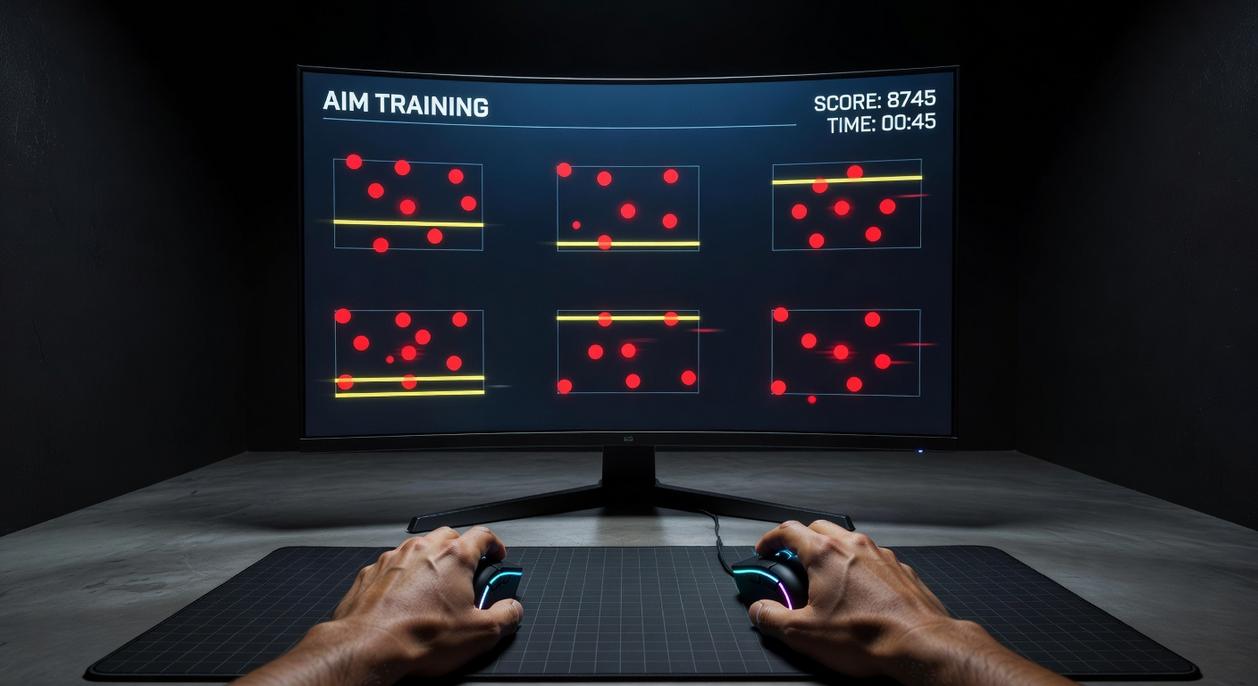
Great aim isn’t bought—it’s trained. Studies on motor learning show that repetition with feedback strengthens neural pathways, increasing reaction consistency over time (Schmidt & Lee, Motor Control and Learning). That’s why structured drills outperform casual play.
Using Aim Trainers Effectively
Tools like KovaaK’s and Aim Lab let you isolate mechanics. For flicking, run “Tile Frenzy” to build rapid target acquisition. For tracking, “Smoothbot” forces you to follow unpredictable movement patterns—similar to strafing duels in live matches. Aim Lab reports that players who train at least 20 minutes daily see measurable accuracy gains within two weeks (Aim Lab performance data). Pro tip: track your hit percentage weekly, not daily (progress compounds quietly).
In-Game Firing Range: 15-Minute Warm-Up
- 5 minutes: Flick between fixed targets, prioritizing precision over speed.
- 5 minutes: Practice spray transfers between two bots to simulate multi-enemy fights.
- 5 minutes: Track a moving bot smoothly without overcorrecting.
This structure mirrors traditional sports warm-ups—short, skill-focused reps prime muscle memory before competition.
The ‘Dot’ Method
Pick a tiny mark on a wall. Hold your crosshair perfectly still. Then make micro-adjustments without overshooting. It’s deceptively hard (and humbling). Over time, this builds fine motor control essential for fps aim improvement tips.
– Precision over speed
-
Crosshair Placement is the ultimate hack because it keeps your aim parked at head level, right where enemies are most likely to appear. Instead of flicking wildly like you’re in a John Wick hallway scene, you minimize mouse travel and win duels faster. Meanwhile, pre-aiming and clearing angles means lining up your crosshair on a corner before you peek, anticipating the hold. Think of it as reading the script before the plot twist. Combined with smart fps aim improvement tips, this game sense turns reaction into prediction, giving you that split-second advantage every single round. Stay ready, stay lethal, always.
Your Path to Pinpoint Accuracy Starts Now
Inconsistent aim isn’t a talent problem; it’s a systems problem. Grinding ranked for hours won’t fix broken fundamentals (no matter what your squad says).
Improvement is engineered. We’ve shown that optimized hardware, precise settings, and targeted practice create repeatable gains. That formula beats random fps aim improvement tips every time.
Still think aim is pure muscle memory? Consider pros who tweak eDPI between seasons to stay sharp.
Pro tip: Pick one variable and isolate it.
- Adjust your eDPI for 20 focused minutes.
- Run a single tracking drill before queuing.
Consistency compounds over time.
As players hone their aim and movement strategies to dominate in competitive FPS games, they should also consider how the emergence of cloud gaming services could enhance accessibility and broaden the competitive landscape, as discussed in our article, “The Rise of Cloud Gaming Services: What Players Should Expect.
Level Up Your Aim and Dominate Every Match
You came here looking for real ways to sharpen your mechanics and gain an edge in competitive shooters—and now you have a clear roadmap to make it happen. From optimizing your sensitivity to dialing in your setup and practicing with intention, you’ve seen how small adjustments can create massive improvements in consistency and reaction time.
The frustration of missing easy shots, losing close-range duels, or feeling stuck at the same rank doesn’t have to continue. Most players grind matches without fixing the root of the problem. You now understand that smart training, optimized settings, and focused fps aim improvement tips are what separate average players from top fraggers.
If you’re serious about winning more gunfights and climbing faster, don’t stop here. Start applying these strategies today, fine-tune your setup, and commit to structured aim practice. For more proven gaming strategies, advanced mod insights, and performance-boosting setup guides trusted by thousands of competitive players, dive into our latest resources now and upgrade your gameplay immediately.

 Ask Geneva Burnsinser how they got into platform play strategies and you'll probably get a longer answer than you expected. The short version: Geneva started doing it, got genuinely hooked, and at some point realized they had accumulated enough hard-won knowledge that it would be a waste not to share it. So they started writing.
What makes Geneva worth reading is that they skips the obvious stuff. Nobody needs another surface-level take on Platform Play Strategies, Insider Tips, Tech-Enhanced Game Mods. What readers actually want is the nuance — the part that only becomes clear after you've made a few mistakes and figured out why. That's the territory Geneva operates in. The writing is direct, occasionally blunt, and always built around what's actually true rather than what sounds good in an article. They has little patience for filler, which means they's pieces tend to be denser with real information than the average post on the same subject.
Geneva doesn't write to impress anyone. They writes because they has things to say that they genuinely thinks people should hear. That motivation — basic as it sounds — produces something noticeably different from content written for clicks or word count. Readers pick up on it. The comments on Geneva's work tend to reflect that.
Ask Geneva Burnsinser how they got into platform play strategies and you'll probably get a longer answer than you expected. The short version: Geneva started doing it, got genuinely hooked, and at some point realized they had accumulated enough hard-won knowledge that it would be a waste not to share it. So they started writing.
What makes Geneva worth reading is that they skips the obvious stuff. Nobody needs another surface-level take on Platform Play Strategies, Insider Tips, Tech-Enhanced Game Mods. What readers actually want is the nuance — the part that only becomes clear after you've made a few mistakes and figured out why. That's the territory Geneva operates in. The writing is direct, occasionally blunt, and always built around what's actually true rather than what sounds good in an article. They has little patience for filler, which means they's pieces tend to be denser with real information than the average post on the same subject.
Geneva doesn't write to impress anyone. They writes because they has things to say that they genuinely thinks people should hear. That motivation — basic as it sounds — produces something noticeably different from content written for clicks or word count. Readers pick up on it. The comments on Geneva's work tend to reflect that.